David Roth · 12 November 2026
Shifts in engagement after infrastructure swaps within adaptive web service layers
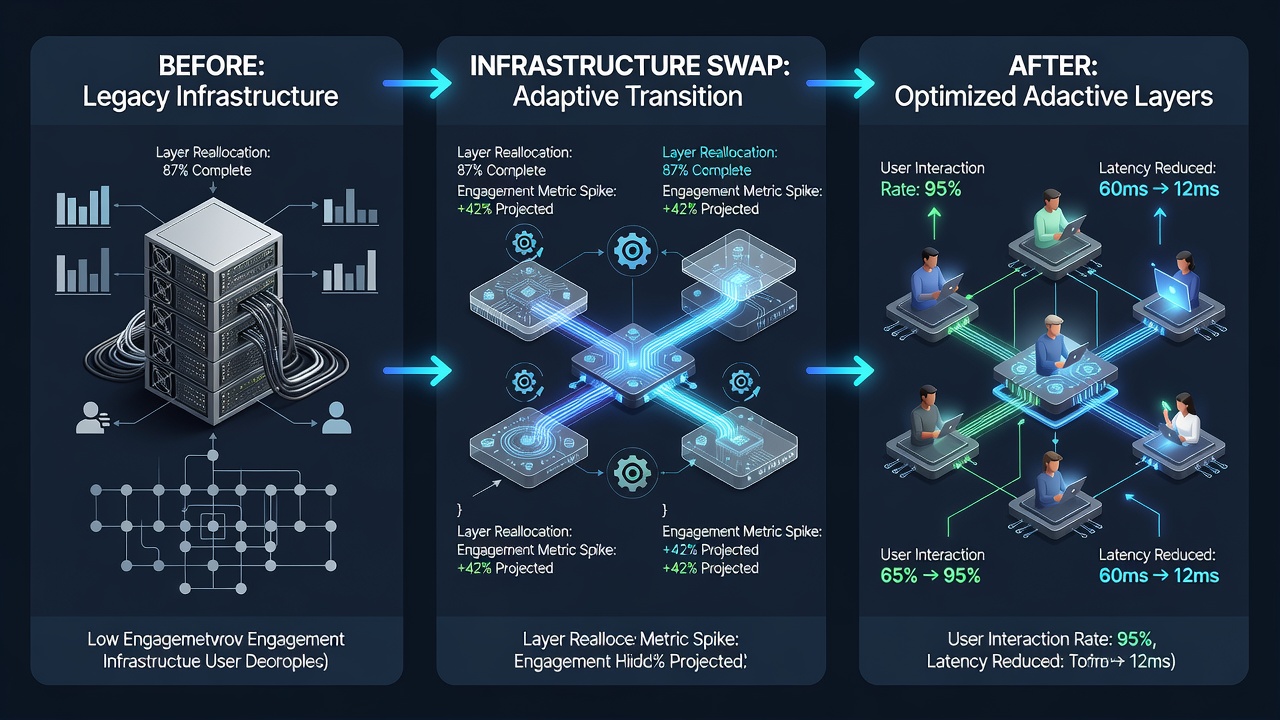
Observers note that infrastructure swaps in adaptive web service layers often trigger measurable changes in user engagement patterns, and these adjustments appear across session durations, interaction frequencies, and return visit rates. Research indicates that such transitions typically involve moving between cloud providers, updating content delivery networks, or reconfiguring API endpoints, while the underlying adaptive mechanisms continue to respond to traffic loads in real time. Data from multiple industry analyses shows that engagement metrics can rise or fall depending on latency reductions and resource allocation improvements that occur during these swaps.
Core Components of Adaptive Web Service Layers
Adaptive web service layers consist of dynamic routing systems, load balancers, and self-scaling modules that adjust capacity based on incoming requests, and these elements operate together to maintain service continuity. Studies reveal that when organizations replace core infrastructure components, such as migrating from one virtualized environment to another, the adaptive functions must recalibrate their response thresholds, which in turn affects how quickly content loads for end users. Evidence suggests that these recalibrations can lead to temporary dips in engagement during the stabilization period, followed by gains once the new setup reaches optimal performance levels.
Those who have examined large-scale deployments find that session depth often increases after successful swaps because reduced downtime allows users to complete more actions within a single visit, whereas bounce rates may climb if initial latency spikes occur during the cutover phase. According to reports from the National Institute of Standards and Technology, cloud infrastructure changes can improve overall throughput when properly managed, yet the transition window itself requires careful monitoring to prevent engagement erosion.
Observed Engagement Patterns Post-Swap
Figures from operational reviews demonstrate that engagement shifts manifest differently across user segments, with mobile visitors sometimes showing faster recovery than desktop users because adaptive layers prioritize device-specific optimizations during reconfiguration. Researchers have documented cases where average time on site rose by measurable percentages after infrastructure updates, particularly when new systems incorporated better caching strategies and edge computing nodes that brought resources closer to end points. These patterns hold across sectors that rely on continuous service availability, and the data continues to accumulate as more organizations complete similar transitions.
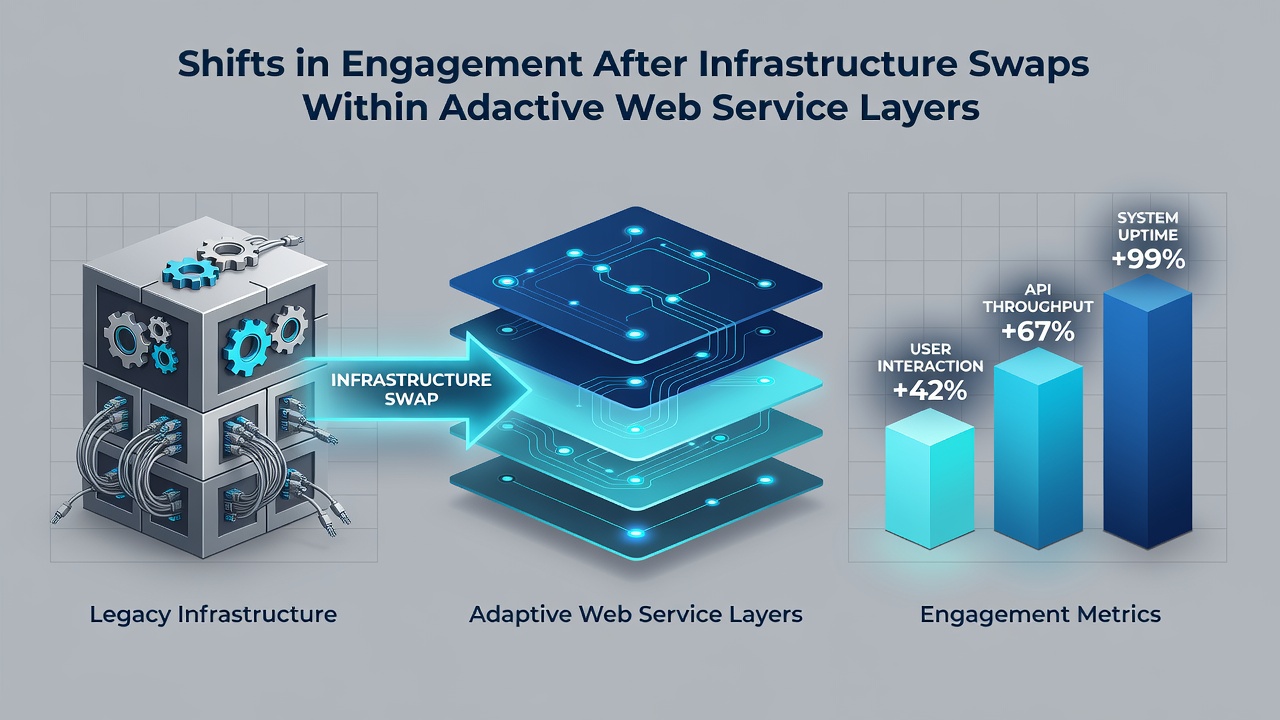
What's interesting is how return visit frequency responds to these changes, and data shows that users who experience consistent performance after a swap tend to increase their interaction volume over subsequent weeks. In November 2026, aggregated platform statistics indicated that sites completing infrastructure swaps saw stabilization in engagement metrics within fourteen days when rollback procedures remained available throughout the process. Observers note that monitoring tools play a central role in identifying which specific layer adjustments correlate with positive or negative engagement trends, allowing teams to fine-tune adaptive rules accordingly.
Factors Influencing Metric Variations
Multiple variables determine the direction and magnitude of engagement shifts, including the scale of the infrastructure change, the extent of testing performed beforehand, and the geographic distribution of user bases that interact with the updated services. Evidence points to bandwidth allocation improvements as a primary driver of higher engagement when swaps introduce more efficient data pathways, while incomplete DNS propagation can produce short-term access issues that temporarily suppress interaction rates. Those who track these events across different regions report that European service providers often emphasize regulatory compliance during swaps, which adds steps that influence the timeline for metric recovery.
Analyses from the European Union Agency for Cybersecurity highlight how security layer integrations during infrastructure transitions can affect session continuity, and these integrations sometimes require additional authentication flows that users must navigate before resuming normal activity levels. Data indicates that organizations maintaining parallel monitoring environments during swaps achieve more predictable engagement outcomes because they can compare pre- and post-swap performance without disrupting live traffic.
Conclusion
Shifts in engagement after infrastructure swaps within adaptive web service layers follow identifiable patterns that depend on preparation, execution, and post-transition adjustments, and the available data continues to inform how these processes unfold across different implementations. Research shows that successful outcomes correlate with thorough pre-swap testing and responsive adaptive configurations that minimize disruptions for users. As more organizations complete such transitions, the accumulated evidence provides clearer guidance on managing engagement metrics through each stage of the change.