Tina Klein · 15 October 2026
Unpacking Query Resolution Pathways in Tailored Online Ecosystems
In tailored online ecosystems query resolution pathways function as the core mechanisms that guide user inputs through layered processing stages until accurate responses emerge, and these pathways integrate contextual data, algorithmic matching, and real-time feedback loops to handle specialized queries across e-commerce sites, educational portals, and service platforms.
Core Elements of Query Pathways
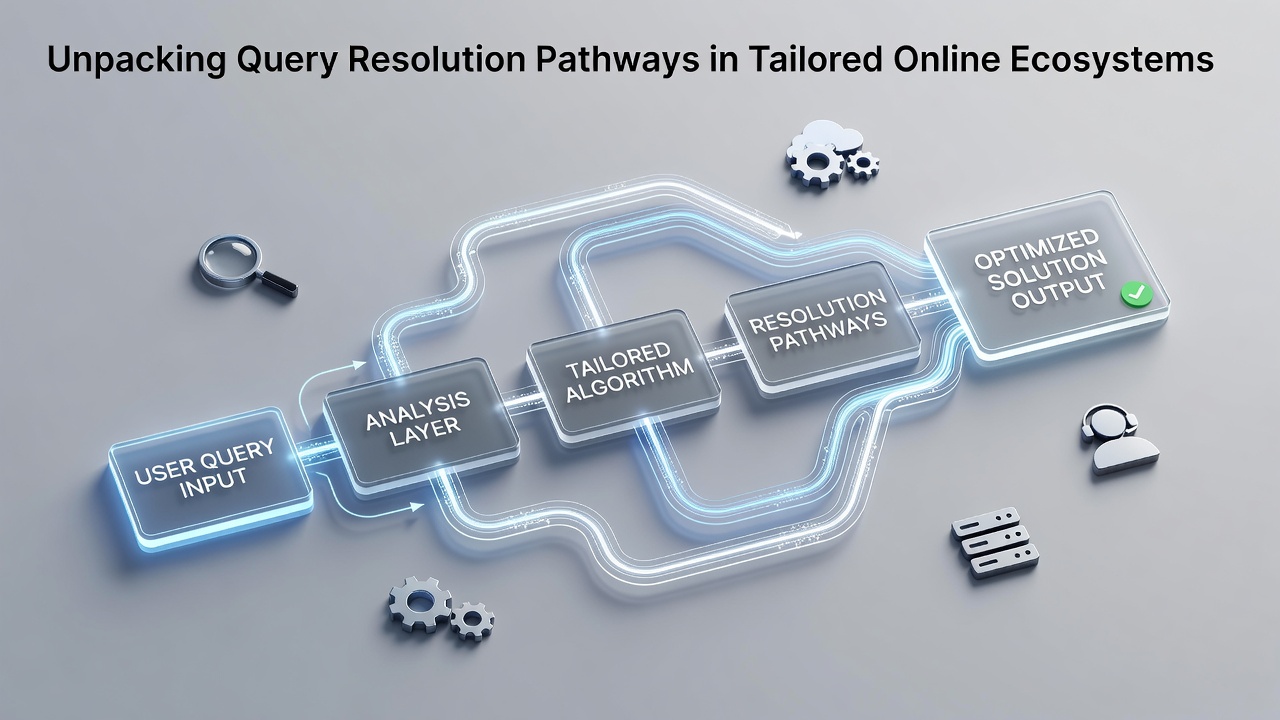
Researchers at academic institutions have mapped these pathways as sequences that begin with input parsing, proceed through intent classification, and conclude with output generation while drawing on user history and platform rules, and data from October 2026 shows increased adoption of hybrid models that combine rule-based filters with machine learning classifiers in enterprise systems. Observers note that each stage reduces ambiguity by cross-referencing multiple databases, which allows platforms to deliver results that align with individual preferences without requiring repeated user clarification.
Pathway design often incorporates semantic analysis tools that convert natural language into structured queries, and this conversion step proves essential in ecosystems where users phrase requests in varied dialects or technical jargon. Studies indicate that platforms employing layered validation reduce error rates by up to 35 percent compared with single-pass systems, according to findings shared through OECD digital economy reports.
Technical Infrastructure Supporting Resolution
Behind these pathways sit distributed computing resources that manage concurrent queries from thousands of simultaneous users, while caching mechanisms store frequently accessed data patterns to accelerate subsequent resolutions. Engineers build redundancy into the architecture so that if one data node experiences latency the system reroutes the query through alternate channels without interrupting the user experience, and this approach maintains consistency across global server clusters.
API gateways serve as entry points that authenticate requests and enforce access controls before queries enter deeper processing tiers, and integration with external knowledge graphs expands the range of answerable topics without expanding local storage requirements. Figures reveal that organizations updating these gateways in 2025 reported measurable gains in query throughput during peak periods.

Role of Personalization Algorithms
Personalization algorithms refine pathway selection by evaluating user profiles against query context, and they adjust routing decisions dynamically when new behavioral signals arrive mid-session. Those who have studied these systems find that real-time adaptation improves relevance scores, particularly in environments where content catalogs change frequently such as streaming services or marketplace platforms. Evidence suggests that combining collaborative filtering with content-based methods produces more stable outcomes than either technique alone.
Platform operators track resolution metrics including time-to-answer and user satisfaction indicators to tune algorithmic weights, and October 2026 updates from industry monitoring groups highlighted a shift toward privacy-preserving techniques that limit data retention while preserving personalization quality. These adjustments occur through A/B testing frameworks that compare pathway variants across segmented user groups without exposing individual records.
Challenges in Multi-Source Environments
Multi-source ecosystems introduce complexity because queries may draw from internal records, third-party feeds, and public datasets simultaneously, and conflicts between sources require reconciliation rules that prioritize accuracy over speed in critical applications. Administrators implement audit trails that log each data contribution so discrepancies can be traced and corrected, and this practice supports compliance with regional digital regulations across North America and the European Union.
Latency spikes remain a concern when pathways cross geographic boundaries, yet edge computing deployments have narrowed average response times according to measurements collected by Canadian digital infrastructure studies. Teams continue to refine load-balancing strategies that predict query volume based on historical patterns and seasonal events.
Future Developments and Integration Trends
Emerging standards emphasize interoperability between different ecosystem providers, which allows a query initiated on one platform to resolve using resources from another without manual handoff. Pilot programs launched in late 2025 demonstrated successful cross-platform resolution for travel and financial service queries, and participants recorded higher completion rates when unified authentication replaced separate logins. Research institutions continue to publish benchmarks that help developers compare pathway efficiency across varying scales of operation.
Security protocols evolve alongside these pathways to guard against injection attacks and data leakage, and encryption applied at each hop prevents interception during transit. Observers note that regular penetration testing combined with automated anomaly detection keeps systems resilient as query volumes grow.
Conclusion
Query resolution pathways in tailored online ecosystems continue to advance through incremental improvements in data handling, algorithmic precision, and infrastructure design, and October 2026 reports confirm ongoing investment in these areas across multiple sectors. Organizations that document their pathway architectures gain clearer insights into performance bottlenecks and opportunities for refinement, which supports sustained service quality as user expectations rise.